
Most of us don’t start Pilates in our 20s or 30s because we’re thinking about what our bodies will feel like at 60. We want to feel stronger now, look more toned, improve our posture, move better, feel good in our clothes, and perhaps, look younger for as long as possible.
But what if the things that make you feel good in your body now are also some of the smartest investments you can make in the version of you 10, 20 or 30 years from now?
Muscle, strength, range of motion, and bone health aren’t things we suddenly need to start thinking about later in life. The foundations we build now can stay with us for years to come. The same goes for our skin: protecting it, caring for it regularly and looking after our overall health makes far more sense than waiting until we notice changes we’d rather reverse.
This is where the benefits of Reformer Pilates get interesting.
Pilates brings resistance, mobility, balance, coordination and control together in one method. It doesn’t focus on just one element of fitness; it trains your body to be strong while moving well. And because the method can be adapted and progressed over time, it’s something that can stay with you through different stages of life.
So, while you might come for the Pilates results you can see and feel now, you could be getting something much more valuable in the process.
You’re investing in the version of you that you want to keep for decades.
What Does It Actually Mean to Future-Proof Your Body?
It’s about developing and preserving the physical qualities you want to keep as you get older, rather than waiting until you notice they’re changing.
Think strength, muscle, balance, cardiovascular fitness, bone health and the ability to move confidently and without unnecessary restriction.
It isn’t about trying to stop the clock. It’s about recognising that what we do in our 20s, 30s and 40s can influence the foundations we’re taking forward with us.
This is what makes Pilates particularly interesting. Rather than focusing on one element of fitness, it combines resistance, balance, coordination and control, qualities that can benefit us now and for years to come.
The NHS recommends that adults include strengthening activities that work all the major muscle groups on at least two days each week, alongside regular aerobic activity, and includes Pilates as an example of a muscle-strengthening activity.
Of course, no single form of exercise needs to do everything. Cardiovascular exercise, resistance training and recovery all have their place. But Pilates offers something particularly valuable: a method designed not simply to make you work harder, but to help you move better.
And that’s something worth holding onto.
What Do Long-Term Pilates Results Actually Look Like?
Long-term Pilates results aren’t only about strength or visible changes. Pilates develops range of motion, stability, coordination and control too, often asking your body to work on several of these qualities at the same time.
Strength is undoubtedly part of preparing your body for the years ahead, but this isn’t the whole picture.
We also want to retain the ability to rotate, bend, extend, balance and move through a good range of motion. We want our bodies to respond to what we’re asking them to do, rather than simply produce force.
Reformer Pilates Benefits Go Beyond Strength
Research suggests the benefits may extend further, with systematic reviews finding that Pilates may improve cardiorespiratory fitness, essentially how effectively your heart, lungs and muscles work together during exercise. This is particularly interesting because better cardiorespiratory fitness is associated with better long-term health.
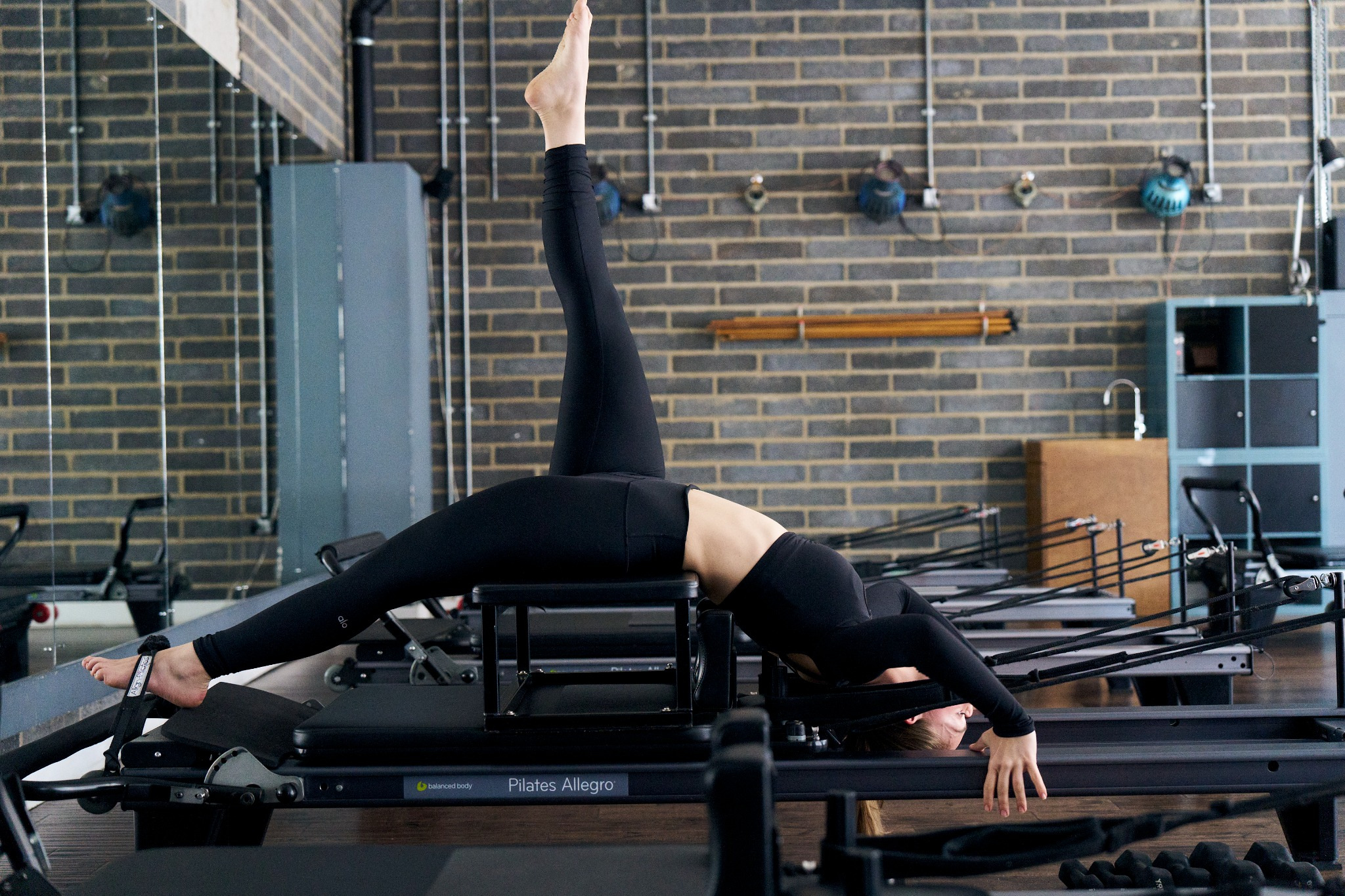
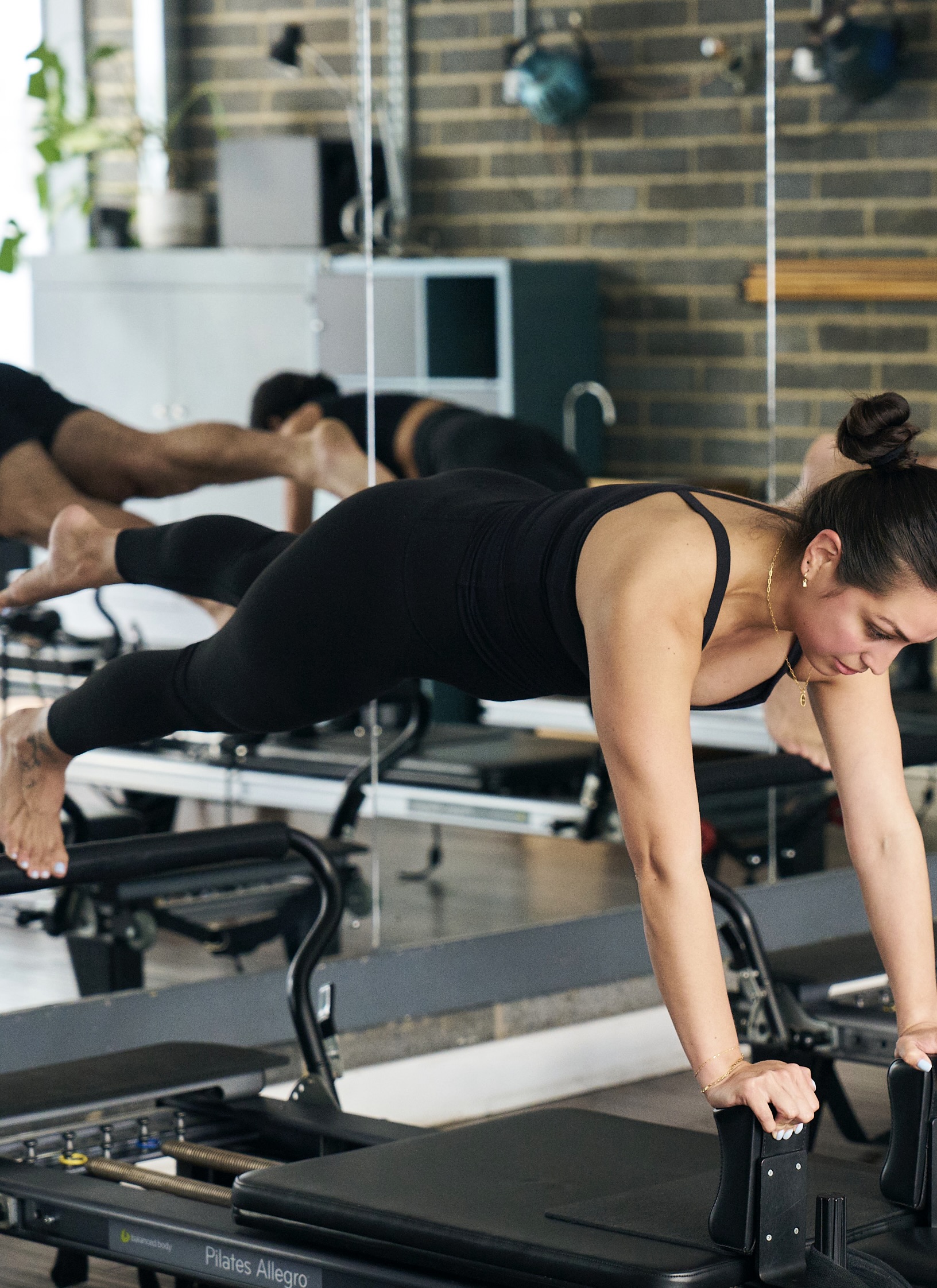
On the Reformer, spring resistance challenges the muscles while the moving carriage demands stability and control. Exercises move the body through different planes of movement, while changes in resistance, range, position and complexity allow the work to progress.
Why Does Control Matter in Pilates?
Unlike exercise built primarily around intensity, Pilates places considerable emphasis on how you move.
Can you control the movement? Can you maintain your alignment? Can you move through the available range without relying on momentum? Can you stabilise one part of your body while another moves?
These might not be the things you think about when you’re 28 and feeling fit, but they’re physical qualities worth holding onto.
At Tempo 301, this is central to our method. Our 3-0-1 tempo slows each repetition down, reducing the opportunity to rely on momentum and asking you to stay in control throughout the exercise.
Can Pilates Continue to Challenge You Over Time?
Our structured class levels mean the method can continue to progress. As strength, coordination and technique improve, exercises become more challenging without simply becoming faster.
After more than 16 years of teaching Reformer Pilates in London, this is one of the things we believe makes Pilates so valuable as a long-term method: you don’t need to outgrow it. A body built for the long term needs more than strength. It needs precision, stability and the freedom to move well throughout life.
“I’ve really built strength and flexibility since attending. They offer a good mix of different-level classes, and the teachers are always highly experienced and engaged.”
Why Is Mobility Worth Working on Now?
Mobility is much easier to take for granted when moving freely still feels effortless.
Sitting at a desk, commuting, spending hours on our phones and repeating the same movement patterns can all influence how our bodies feel. You don’t need to be older to recognise stiff hips, tight shoulders or a back that doesn’t particularly enjoy eight hours at a laptop.
Pilates regularly takes the body through flexion, extension, rotation and lateral movement while asking you to control those ranges.
And that’s an important distinction. Flexibility is only part of the equation. Being able to access a range of motion is useful; having the strength and precision to use that range is even better.
This combination is one of the reasons Pilates can remain relevant throughout different stages of life.
Why Should You Care About Muscle in Your 20s and 30s?
Muscle isn’t only about lifting heavier weights or changing how your body looks. It plays a central role in how we move, which is why challenging the muscles is an important part of Pilates too.
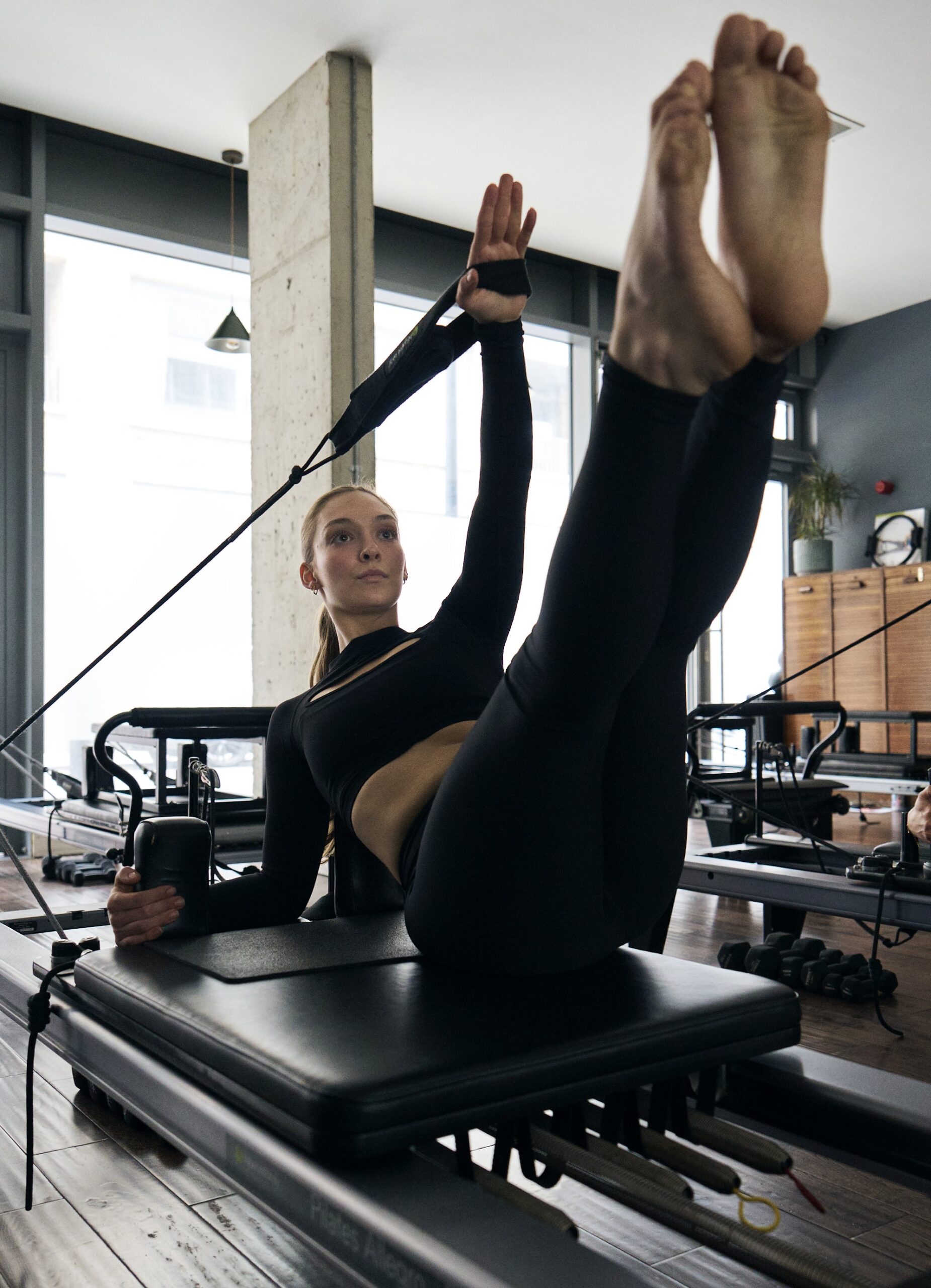
Reformer Pilates uses spring resistance, body weight and controlled movement to create muscular challenge. The controlled pace can also increase muscular challenge by keeping the body working throughout each repetition.
And here’s the part that’s easy to ignore in your 20s and 30s: muscle isn’t something you can take for granted forever.
Muscle mass and strength change throughout adulthood, particularly as we get older. Building a good strength base now (and continuing to use it) means you’re not waiting until later to suddenly start thinking about how to preserve it.
This is also why the conversation around women’s fitness has moved beyond simply trying to burn as many calories as possible. Being lighter isn’t necessarily the same thing as being stronger, fitter or better prepared for the decades to come. When it comes to the benefits of Pilates, what you see in the mirror is only part of the story.
How Does Strength Training Fit Alongside Pilates?
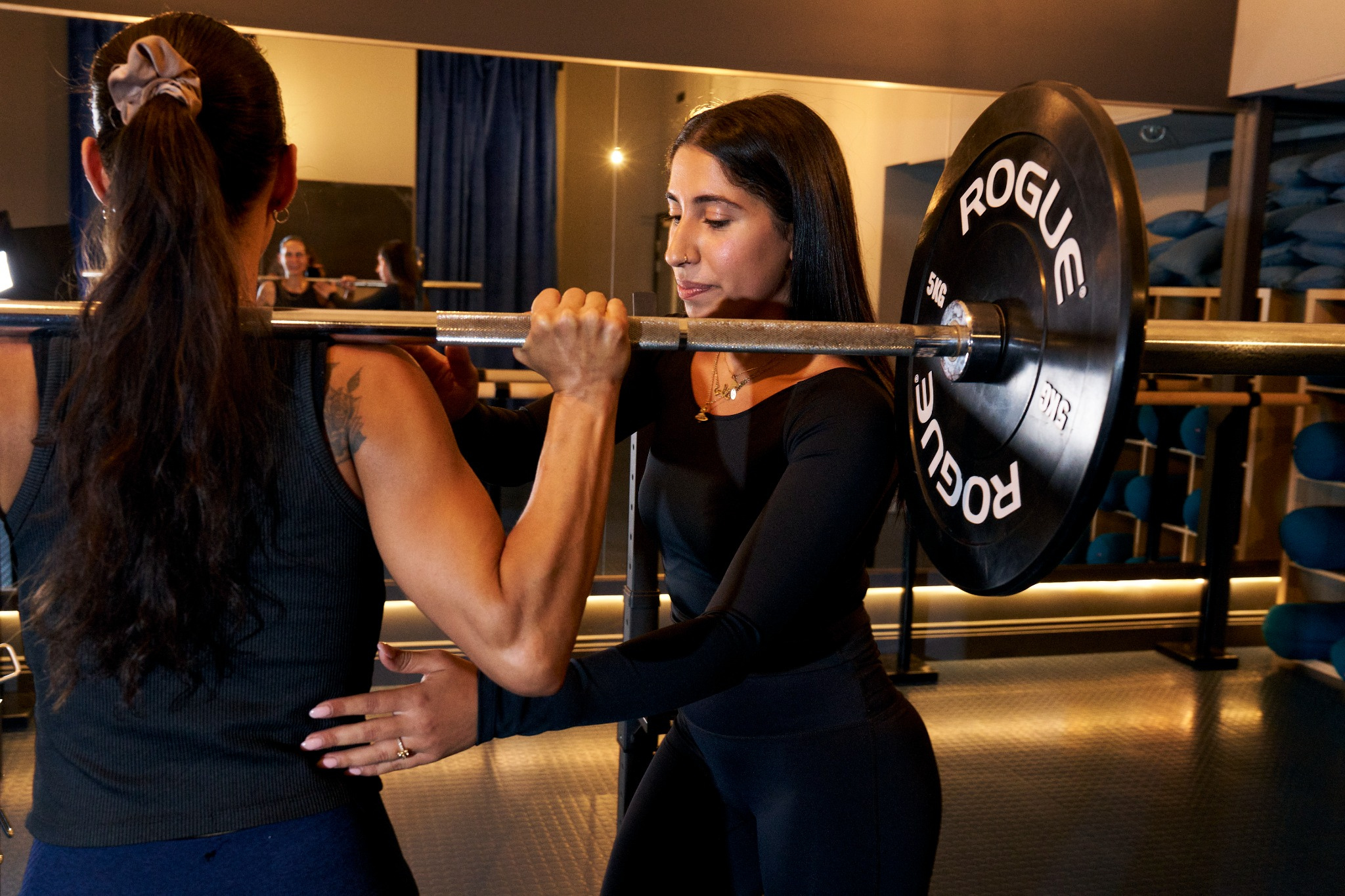
Pilates and strength training work brilliantly alongside each other because they challenge the body in different ways.
Reformer Pilates uses spring resistance and body weight while simultaneously demanding control, stability, mobility and coordination. Dedicated strength training allows us to progressively increase external load and focus specifically on building muscular strength.
At Tempo 301 Elephant & Castle, students can combine Tempo Pilates with Tempo Strength, bringing both approaches into their weekly training.
Can Reformer Pilates Benefit Bone Health?
Your 20s and 30s are an important time to think about bone health, even if it’s probably nowhere near the top of your current fitness goals.
Bone is living tissue. Like muscle, it responds to the demands we place on it.
According to the NHS, weight-bearing exercise and resistance exercise are particularly important for building and maintaining strong bones.
Public perception often treats bone health in women as an issue for later life, particularly after menopause, but the foundations for strong bones are built much earlier.
This is another reason to look beyond exercise purely in terms of calories burned or how tired you feel afterwards. A workout can be doing things for your body that you can’t see in the mirror.
For bone health specifically, Pilates shouldn’t be your only strategy. Combining it with resistance training and appropriate weight-bearing activity creates more rounded training habits.
The things you can’t see changing can be just as important as the things you can.
Can Exercise Help You Look Younger for Longer?
The Reformer Pilates benefits we notice first are often physical, but how we look is only part of the picture. Exercise can’t stop ageing, but preserving muscle, looking after your posture, and overall health can all contribute to a stronger, healthier and more youthful appearance. Looking after our bodies isn’t only about how they perform. How we look and feel counts too.
Most of us would like to feel good when we look in the mirror as well as when we’re moving around. Wanting to look younger for longer doesn’t have to mean chasing unrealistic promises or trying to stop yourself ageing altogether.
It can simply mean taking care of what you have.
Maintaining muscle can help preserve a strong, defined physique. Pilates works on alignment and body awareness, which can influence how we hold and carry ourselves. Regular exercise also sits alongside sleep, nutrition, hydration and stress management as part of looking after our overall health.
We tend to separate fitness from beauty, but they’re often driven by a similar goal: to feel strong, healthy, confident and youthful for as long as possible.
That doesn’t come from one workout, one cream or one treatment. It comes from what you do repeatedly.
Can Better Recovery Improve Your Results?
Yes. Recovery is part of getting stronger, not time away from getting stronger.
More isn’t always better. Exercise creates a stimulus, but you also need adequate sleep, nutrition, hydration and rest to adapt to the work you’re doing.
For someone in their 20s or 30s juggling work, social plans, travel and everything else life throws in, this can be easy to overlook. Exercise becomes another thing to squeeze into an already busy week.
But a routine designed for the long-term has to be sustainable.
That might mean alternating harder training days with Pilates, yoga, or gentler movement. It might mean taking a rest day when you need one rather than trying to hit an arbitrary number of workouts every week.
At Tempo 301 Elephant & Castle, this is also why Tempo Recovery sits alongside Reformer Pilates and Strength. Challenging your body and looking after it don’t have to be opposing ideas.
So, What’s the Smartest Routine For You?
To get the most from the long-term Reformer Pilates benefits, the smartest approach is to complement Pilates with other habits that contribute to your health and well-being.
- Reformer or Mat Pilates for control, range of motion, coordination and resistance
- Dedicated strength training to build and preserve muscle
- Weight-bearing exercise to promote bone health
- Cardiovascular exercise for heart and overall fitness
- Walking and everyday movement
- Adequate sleep, nutrition and hydration
- Rest and recovery
- Daily sun protection and regular skincare
- Professional treatments if they’re something you enjoy and find beneficial
You don’t have to do all of these perfectly.
The point is to stop thinking about health and fitness purely in terms of what you want to look like three months from now. Think about how you want to look, feel and move in 10, 20 or 30 years too.
So, is Pilates the smartest way to future-proof your body? We think it has a very strong case.
Few exercise methods ask you to work simultaneously on resistance, balance, alignment and control, or give you so much scope to adapt and progress as your body changes.
Pilates doesn’t have to do everything. Strength training, cardiovascular exercise, everyday movement and recovery all have their place. But as a method you can begin in your 20s or 30s and continue practising for decades, its value goes far beyond the results you see in the mirror today.
After more than 16 years of teaching Reformer Pilates in London, we’ve learnt that the most valuable results aren’t always the ones you see after ten classes. They’re the strength, confidence and quality of movement you continue to carry with you.
The work you put in now is an investment in how you want to move, feel and live for years to come.
Ready to experience the benefits of Reformer Pilates for yourself?
New to Tempo 301? Try 3 Reformer Pilates classes for £48, valid for five weeks across our London studios.
FREQUENTLY ASKED QUESTIONS
References
- NHS – Physical activity guidelines for adults aged 19 to 64
Supports the recommendation for strengthening activities at least twice a week, alongside aerobic exercise.
NHS: Physical activity guidelines for adults aged 19–64 - NHS – Osteoporosis Prevention
NHS: Exercise for strong bone - Journal of Clinical Medicine – Pilates Method Improves Cardiorespiratory Fitness: A Systematic Review and Meta-Analysis
Supports the evidence that Pilates can improve cardiorespiratory fitness.
Journal of Clinical Medicine: Pilates and cardiorespiratory fitness